Material Transitions in Interior Design: Why Details Matter
A beautifully designed interior is not defined by its materials alone.
It's defined by how those materials come together.
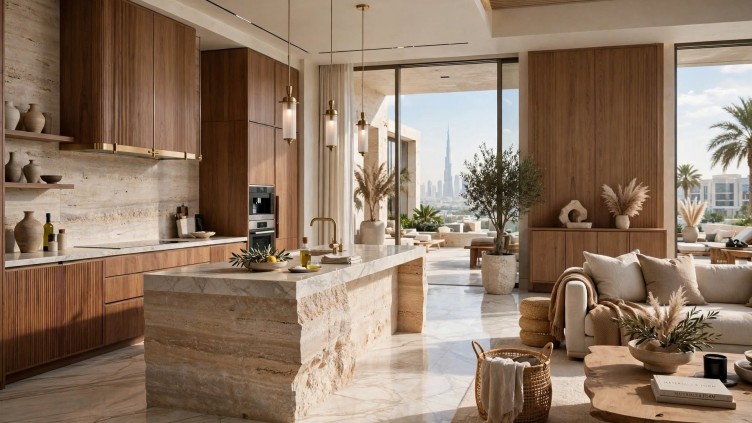
The transition between marble and wood. The connection between flooring and walls. The alignment of cabinetry with architectural finishes.
These details may seem insignificant individually, but together they determine how refined and cohesive a space feels.
In luxury interior design, material transitions play an essential role in creating seamless connections between different surfaces, textures, and finishes.
Here are six ways thoughtful material transitions can elevate an interior.
1. Create Visual Continuity
A refined interior should feel connected rather than divided into separate design elements.
Poorly planned material changes can interrupt the visual flow of a room.
Successful material transitions consider:
- Consistent floor levels
- Complementary colours and textures
- Clean junctions between finishes
- Alignment with architectural features
- Continuity between adjoining spaces
When materials connect naturally, the entire interior feels more balanced.
The most sophisticated spaces often make these transitions almost invisible.
2. Balance Contrasting Materials
Luxury interiors frequently combine materials with different characteristics.
Warm wood.
Cool marble.
Textured stone.
Smooth metal.
Soft fabrics.
The challenge is creating harmony without losing the individual character of each material.
Designers should consider:
- Colour temperature
- Surface texture
- Material thickness
- Reflectivity
- Finish consistency
A thoughtful combination creates contrast without visual competition.
True elegance comes from balance, not excess.
3. Pay Attention to Flooring Transitions
Flooring is one of the largest visual surfaces in any interior.
The way different flooring materials meet can significantly influence the finished appearance.
Important considerations include:
- Tile-to-wood connections
- Consistent finished floor levels
- Suitable transition profiles
- Expansion and movement allowances
- Doorway and threshold detailing
Poor transitions can create awkward visual breaks and potential maintenance issues.
Well-executed flooring connections improve both appearance and functionality.
4. Integrate Joinery With Architectural Finishes
Bespoke joinery should feel like part of the architecture rather than an addition to it.
This requires careful coordination between cabinetry, wall finishes, flooring, and lighting.
Key details include:
- Consistent panel alignment
- Precise cabinetry dimensions
- Clean wall-to-joinery junctions
- Concealed fixing methods
- Integrated lighting details
- Carefully selected edge finishes
These small decisions contribute to a seamless final result.
When joinery and architecture work together, the interior feels more intentional.
5. Use Lighting to Enhance Material Connections
Lighting influences how different materials are perceived.
A carefully positioned light source can highlight natural stone textures, enhance wood grain, or create subtle depth along architectural surfaces.
Effective lighting strategies include:
- Concealed LED illumination
- Wall grazing for textured surfaces
- Recessed architectural lighting
- Accent lighting for feature materials
- Balanced colour temperatures
However, lighting can also expose uneven surfaces and poorly finished junctions.
This makes coordination between lighting design and material installation essential.
Good lighting should enhance craftsmanship, not reveal avoidable imperfections.
6. Prioritise Precision During Installation
Even the finest materials can lose their impact through poor execution.
Luxury interior fit-out requires accuracy at every stage, from technical drawings to final installation.
Professional execution should focus on:
- Accurate site measurements
- Detailed material specifications
- Proper substrate preparation
- Consistent installation tolerances
- Appropriate movement joints
- Quality inspection and finishing
Precision helps ensure that materials not only look refined but also perform reliably over time.
Because true craftsmanship is found in the details that connect everything together.
The Kensova Approach
AtKensova Interiors, we believe exceptional interiors are created through the careful coordination of design, materials, and execution.
Our approach combines thoughtful space planning, premium material selection, bespoke joinery, technical detailing, and end-to-end fit-out services to create interiors that feel cohesive and timeless.
From the first design concept to the final installation, every transition is considered as part of the overall experience.
Because luxury isn't simply about selecting beautiful materials.
It's about bringing them together beautifully.
Final Thoughts
The difference between an ordinary interior and an exceptional one is often found in the smallest details.
Where the flooring meets the wall.
Where stone connects with wood.
Where cabinetry becomes part of the architecture.
Where lighting reveals texture and depth.
When these connections are designed and executed with precision, the entire interior feels effortless.
Great design isn't only about the elements you notice.
It's also about the details that bring everything together.